
Maybe someday I will again travel solo (and not for work). As it stands, it’s before dawn in Seattle. I am “awake” with my very East Coast time-zoned toddler watching the nth episode of Super Kitties. This has been true for a while already this morning. And sure, I’m still grateful if bleary-eyed.
Journal
I believe in truth and reconciliation, full accountability of each and every one of those with power or who exercise violence, and in a zero state solution.
Maybe someday we’ll learn.
On what little patch of Earth will be left that we hope to sustain.
No man is an island
The LEGO bricks are still on the floor this morning. This is a compliance failure and an enforcement failure. I fetched the child’s first yogurt of the morning and issued a warning.
“LEGO that doesn’t get picked up gets sucked up into the vacuum cleaner!” It just happens. I’m not trying to do it. I just can’t guarantee that if you don’t put your LEGO back that we can get all of your LEGO back. That’s your job, son.
A gasp and then a shrug of denial. Quick, change the subject! “Daddy, can I watch some TV?”
I snag the Apple TV remote, waking the device, and notice that Disney+ is already launched. “How about some Bluey?”
The child accedes and the episode already queued up is entitled “Housework.” Karma.
As with all Bluey episodes, whether or not the episode is substantially focused on the topic in the title is kind of beside the point. To oversimplify: Bluey and Bingo are asked to participate in housecleaning—see, child, they have to do it too—and ultimately distract their parents with their silly walks which they then teach their parents. (And ultimately everyone does their fair share of housework. I try not to compare that to us.)
And then I see it, the crucial evidence: a knobby plastic brick in the vacuum cleaner Bluey’s Dad is running! (Rewind. Freeze frame.) There, kid. Consequences are everywhere.
A solemn nod. And then he dove back into his own LEGO pile.
It is time to go to school.
I will pick up the LEGO today when I do all the housecleaning by myself on my island of solitude and LEGO and who the hell knows what else is underfoot?
Coffee rings and Google
I have forgotten, if I ever knew, about how coffee rings form. And Google sucks.
Nearly every morning I pour myself a cup of coffee. Hot, iced, whatever — into a clean vessel, a mug or glass, often straight from the dishwasher having been run the night before. Every time (or every time I think to look) there is instantly a small ring puddle, a footprint of the vessel, on the counter.
I did not spill.
I am not including times when I spill, those times when there’s a splash that hits the counter or when I miss more closely and some hits the rim and flows down the side. You can see it when it happens, and there’s other trace evidence — spatter, traces of rivulet. You might even hear unexpected sounds of unexpected impacts if you’re otherwise attentive in a quiet setting.
I’m supposing some minor mystery of science on which much has been said. One that I am sure I was taught about by Mr. Hall in my 8th Grade Science class (mostly a physics class, where, if nothing else it seemed everything was fair game for a Newtonian force vector diagram).
Off to Google.
The Google results are shit.
The only thing close to an appropriate result is a Quora thread, where someone asks the same thing I am asking and everyone seems to suggest he actually spilled and didn’t know it. Or there was a hairline fracture in his mug. I know I didn’t spill. And I use a wide variety of vessels, none (let alone all) have a hairline fracture. Pigfucker Quora trolls are gaslighting this poor man and me.
There’s some seemingly bullshit answer about condensation, but water from the air would condense on the outside when I have a cold drink. Not coffee. And not with a hot drink in a cold room.
There are a lot of other interesting articles, adjacent but still seemingly irrelevant, about the actual nature of the coffee ring itself: how it’s thicker at the edges and capillary flow and evaporation being the cause. Fine. Many of them specifically suppose one spilled their coffee or describe the effect on the inside of a coffee mug. (Some allege an impact on flavor and enjoyment? I did not check to see if these web sites also had guidance on which crystal to deploy next to my coffee maker or to pair with my eggs.)
Many of these articles seem to appear around the same time as each other because some scientific paper on capillary flow came out or something (I don’t know, I didn’t go that far down the rabbit hole). They have headlines like, “Ever wonder why spilled coffee dries to leave a ring?”
NO! I don’t spill my goddam coffee. I’m wondering how the coffee got there in the first fucking place and I don’t wonder about the actual nature of the ring left behind I always intuited it was something like a capillary effect without so many words Jesus fucking Christ.
Breathe.
I don’t know, maybe I spilled my coffee.
Far up the river, 22 years ago, daydreaming and looking out the window “that’s not how you land at Albany,” or a thought to that effect.
Well that is not where it landed.
I will not forget that, and all the hell that ensued that day and for decades to come. It isn’t over.
Semper fuck you
Or “Can there be closure for a wound carved by systemic failure?"
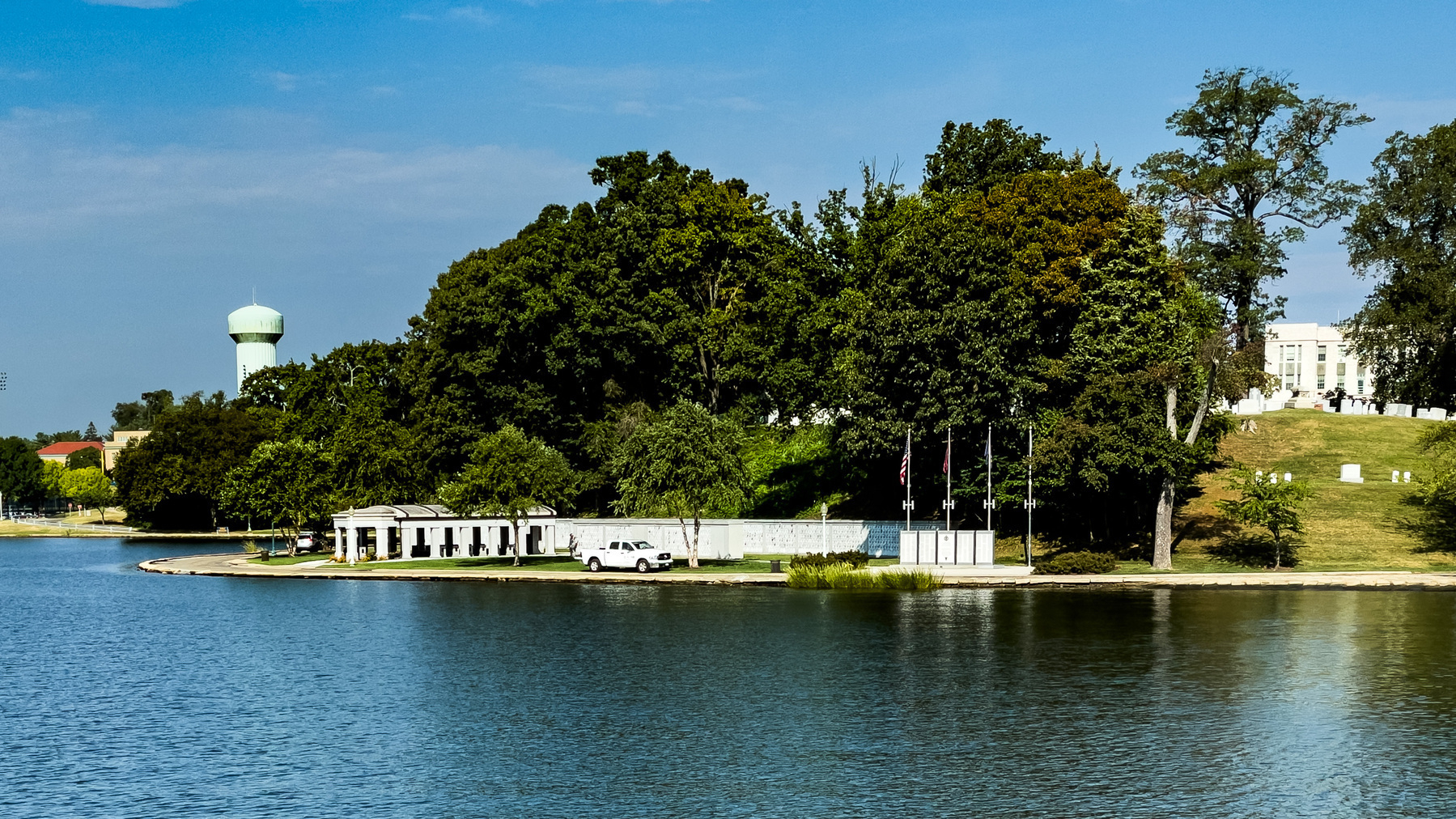
I’ve visited on or close to the anniversary more years than not since I’ve been an adult in the region with access to a car. This time felt like a little bigger deal—a big round number. It is 30 years to the day since we lost my uncle. This time it was more explicitly acknowledged that my going was on behalf of the whole family.
Today a couple of them talked about him with me more than I have heard in a long time.
My father, his oldest brother, told me today he doesn’t remember the funeral. He was there. My dad brought us all down. My family showed up for funerals. My baby sisters had been to more than a few already. He was obviously torn up, but I did not realize how deep it cut until that comment today.
I realized that I remember this particular funeral, which I attended right around my 12th birthday, with more detail than all the rest (dozens, maybe hundreds, including 3 grandparents). I have detailed pictures and reels in my mind of the solemn ceremonies and procession; the deference to our family while we were on the Naval Academy grounds. The funeral mass in the Naval Academy Chapel. The 3-volley 7-rifle salute. Was there a flyover? Taps. The folding and handover of the flag to my grandmother. The slow drives in government vehicles. The crabs and beers and tears and laughter in the Officers Club. The crisp salutes from plebes, cadets, and officers offered along these routes to us—to him.
I retraced those steps, again, today. I even got a half-cocked almost salute from a fresh plebe before he corrected himself.
I have a letter from my uncle, from some helicopter carrier, written while he was in the Sea of Japan or nearby, which I treasured when he was alive and is priceless now. He had the kind of pull that might’ve sent me a different way if we hadn’t lost him. He was a true believer in a way I am not. I don’t know who he’d be now, at 67. I extrapolate ideas of him, as I’m sure all in my family do, projecting their best version of intentions and wiser reactions to current events into the void.
The sad fact that never goes away: we lost one of the most magnetic people in our family, a natural leader, a hard-driving person who was coming into a new version of himself as fatherhood loomed, all due to the indifference of the military-industrial complex. I don’t know how much my family has wrapped their heads around that.
I’m learning it takes decades to process. Maybe forever.
Semper Fi and all that…
Adobe to discontinue Creative Cloud syncing — this is probably the push I need to ditch Lightroom and move to a different cataloging tool (on top of my other cloud and local storage) and a different editor/“darkroom” tool. I do miss Aperture.
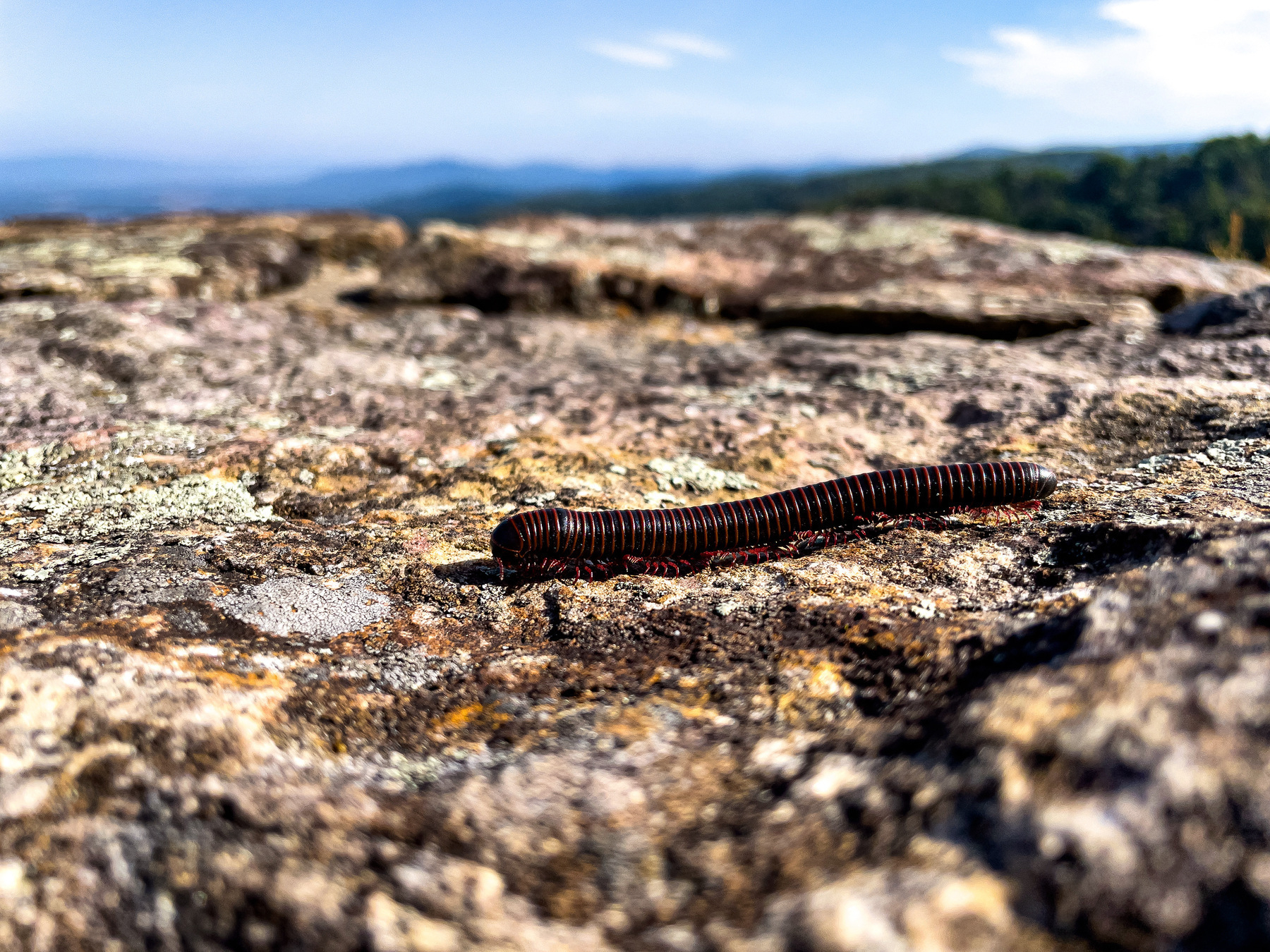
Molly Holzschlag
I never met her but I was touched by her work. I knew of her as an open web advocate, as the creator of valuable resources (I own(ed) two of her books as I taught myself into something like the early stages of a career). I saw the fight she, Zeldman, and others were leading as a fundamental underpinning to my (and any) more overtly political fights. And aren’t we all (re)learning that lesson now.
"Beef guzzlers: 12% of Americans eat half of the country’s cow meat"
A single cow can belch up to 264 pounds of methane in a year, the equivalent of burning almost 4,000 pounds of coal or driving a gas-powered car about 9,000 miles. That’s why climate advocates say people should eat less beef if they want to help ease climate change.
…
Who, exactly, comprises that group? “There’s some of everybody,” Rose said, but men and people between the ages of 50 and 65 are most likely to be big beef eaters, the study found.
I don't know what the carbon outlay of Ozempic is, but my overweight steak-and-burger-loving diabetic-amputee-Dad doesn't even feel like ordering a steak now that he doesn't have the appetite to finish more than a third of it.
First day of school blues
Today is the first day of school in Washington, D.C.
Every year this heralds a spike in traffic across our neighborhoods: School zones have an active impact on traffic flow again, more people walking and in crosswalks at intersections, parents who use cars to drop off kids and commute are suddenly out on the road at the same time, the few school buses D.C. uses for specific purposes are now on the road, etc. (I’ll save the digression on how the city’s public transportation doesn’t seem reliable for many or entirely safe for a lot of school students).
This is all as expected. It’d be great to get more of those cars off the road but in lieu of that…
How about not putting more road crews out this same morning? While the fairer months are the time for road improvements and projects that ultimately end with road repair, this actually seemed like an easily avoidable conflict for today.
I encountered more excavators, loaders, equipment trailers, traffic cones, closed-off streets and street sweepers this specific morning (not to mention, in our particular neighborhood it was also a trash collection day) than I have any morning in doing drop-offs and running errands all summer. As the “household majordomo” I’ve been making these runs frequently and with comparable timing — this was exceptional. It seemed as if all these crews were trying to get their summer homework done before homeroom after slacking off all summer.
The sudden burst in road work seemed to have a disproportionately powerful compounding effect and I think it would have made a notable positive difference (in chaos, safety, emissions, time saving) to pause or delay permits for all that activity by a day or two as the city settled back into its school year routine.
Or you know, make public transportation work (and in the long run, reduce how much that road work has to happen because of that too).
I couldn’t take much of the Republican debate (there was already bile pooling in my mouth just after it began) after I heard the sui-eco-cidal answers to the climate crisis question.
My own identity is federated (as well as idle or abandoned and isolated) across many networks and platforms. I feel like some sort of social web equivalent of a vector analysis diagram might reveal a true center, or destination I suppose. Some notional node between the nodes.
Feelings about the half-past dead
It had come to feel trite to, along with “everyone else,” stop and post something, conspicuously sharing that one was aware of and appreciated, ostensibly mourned, the passing of someone well known. I have stepped back on social media, so I didn’t say anything about Robbie Robertson as soon as I heard.
But I was listening to World Cafe (I happened to be listening to the WEXT stream, pretending I can feel my idealized version of optimal weather from Upstate NY wash over me with the music being broadcast out of the Mohawk Valley) and they rebroadcast an interview with Robertson.
This is what you do when anyone you care about passes. You stop, you appreciate them, you tell others about them, and maybe you make a little vow about how you’ll maintain their memory for yourself going forward.
And while I am not of that generation and other demographics for whom Robbie Robertson was a first-order cultural contemporary, maybe even hero, the tentacles of his and others' music and that counterculture have stretched out and touched my whole life in different ways through family and geography.
Good for him. Good for me.
RIP.
What the hell happened to printer friendly CSS‽
What the hell happened to printer friendly CSS‽ Especially you fucks publishing 4,000... 8,000 plus word essays. Jesus. I'm doing your work for you, but just for myself with dev tools or stop the madness, just so I don't go insane. Or maybe because you've already driven me there.
And, I see all your ridiculous libraries and frameworks which, even minified, add kilobytes (if not megabytes) of cruft. Maybe not the case when also compressed, but now you're just making me use cycles on my end to realize that "benefit." It goes somewhere kids. It goes somewhere. You shit it out, we have to eat it.
Fuckin' Christ.
Dave and Art did enough damage.
…the least we can do is take their money and run. Or something.
Today was the first day in a while without structured plans and without starting out with a steaming hot morning en route to a 90F high, only to feel even hotter.
So my son and I got on the bike and went to our town’s free museums… yes, the Smithsonian Institution. We’re lucky to have this and I try to remember that and make use of them, for my own benefit, but especially for my toddler’s. That said, I glaze over portions I think I know sometimes… and sometimes I discover something that might’ve been on display for years because I was finally paying attention. Among the nuggets today was a little bit of locking on to a couple of the big donor names behind some of the exhibits, and the politics of those names still being on plaques or carved in stone, despite disgrace or challenging content.
The Smithsonian Museum of Natural History (my son calls it the “Dinosaur Museum,") and its Hall of Fossils doesn’t seem to shy away from Climate Change education. I say that because it is the David H. Koch Hall of Fossils and that pig fucker spent a lot more of his money to stop society from understanding and confronting the climate crisis. Either the Smithsonian didn’t agree to any dictates on the substance of exhibits (Koch’s name is also all over a massive human evolution exhibit which seems both accessible and solid, as far as I can tell), or they said “fuck you, Dave,” after he died. I assume the former.
Meanwhile, across the Mall, at the National Museum of Asian Art, once more prominently known as the Freer & Sackler Galleries they’ve changed the emphasis, but have apologized for having to technically keep the Sackler name on the gallery. Apparently, they’d have to give up a bunch of their stuff.
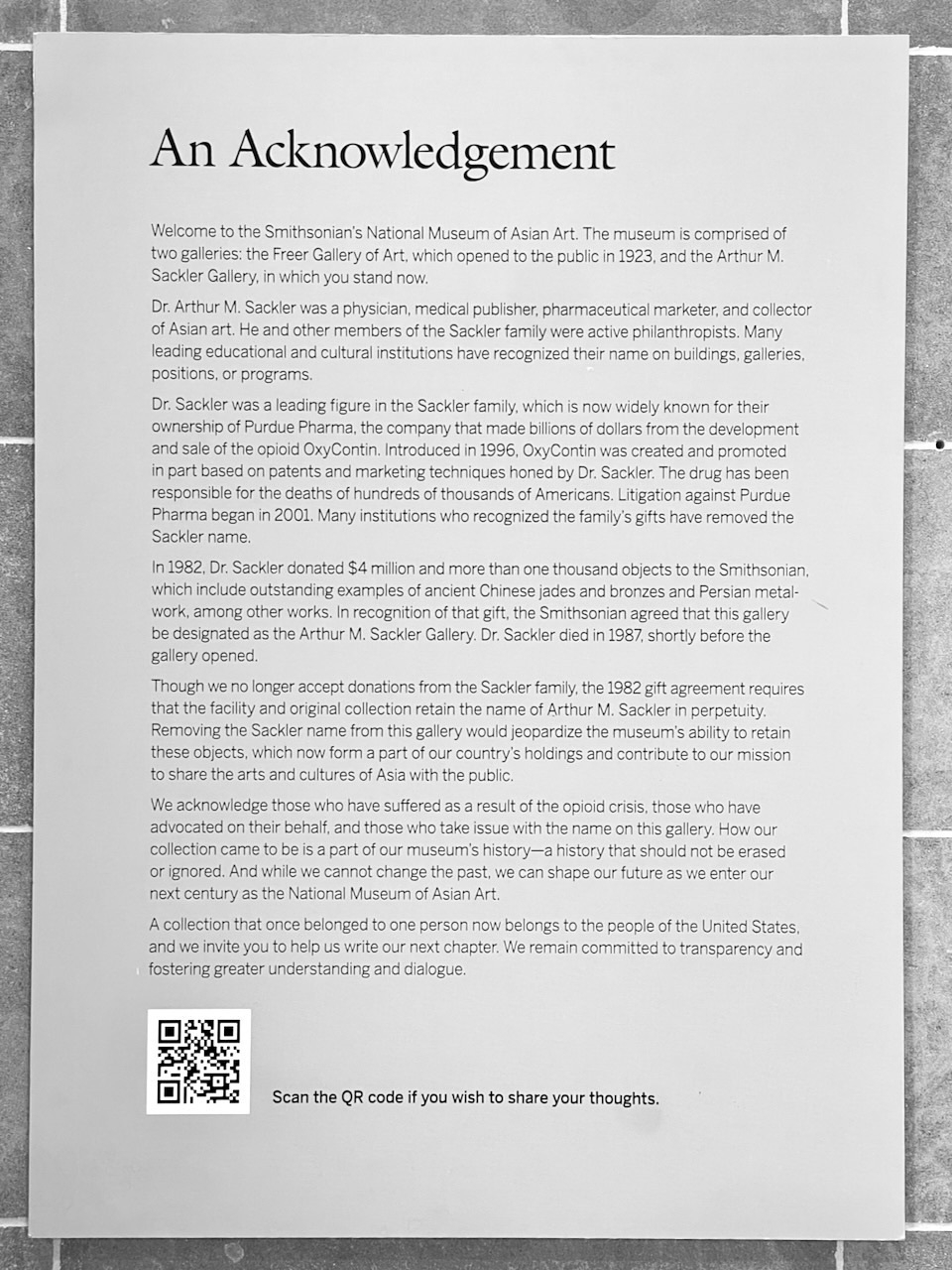
I don’t know the true how and why behind all this, but it sure seems that one museum was better at negotiating a donation and its conditions than the other.
Over at the American History Museum, in General Motors Hall of Transportation, also paid for by ExxonMobil, among others, the electric car does get a mention, as does Ralph Nader… but you kind of have to know the current state of the art and some of the history to appreciate the effort made to get that technology (and its long history!) and, separately, Ralph (a friend, a former boss), included in this exhibit.
Daniel Ellsberg. ¡Presente! It is a story I’ve alluded to too many times in too many places, a boring one at that (I had no role except to be there) but I had lunch with him in early March 2003. He was discussing with my then-boss his premeditated protest outside the White House of the imminently expected invasion of Iraq.
Keep it dumb, dummy.
Will it be possible to buy a dumb electric car? No Internet Protocol dependence and certainly no fucking ChatGPT? I don’t mind contemporary local computer-driven safety features—not talking Model T dumb. I like the idea of bringing extra brains and network connectivity to the vehicle with me (e.g. via smartphone) but entirely optionally.
I’d still like to go for a drive without anyone but… the CCTV and imagery satellites and drones knowing where I am. 😮💨
Developer Betas have crept onto all of the devices. 🤷🏻♂️
Bad air
For the second day in a row, I am explaining to my 3-year-old why we’re not going to the playground. Hauling out the weather app, showing him the AQI map, and saying “Do you remember when you said the air was smoky? You were right - the air is bad right now.”
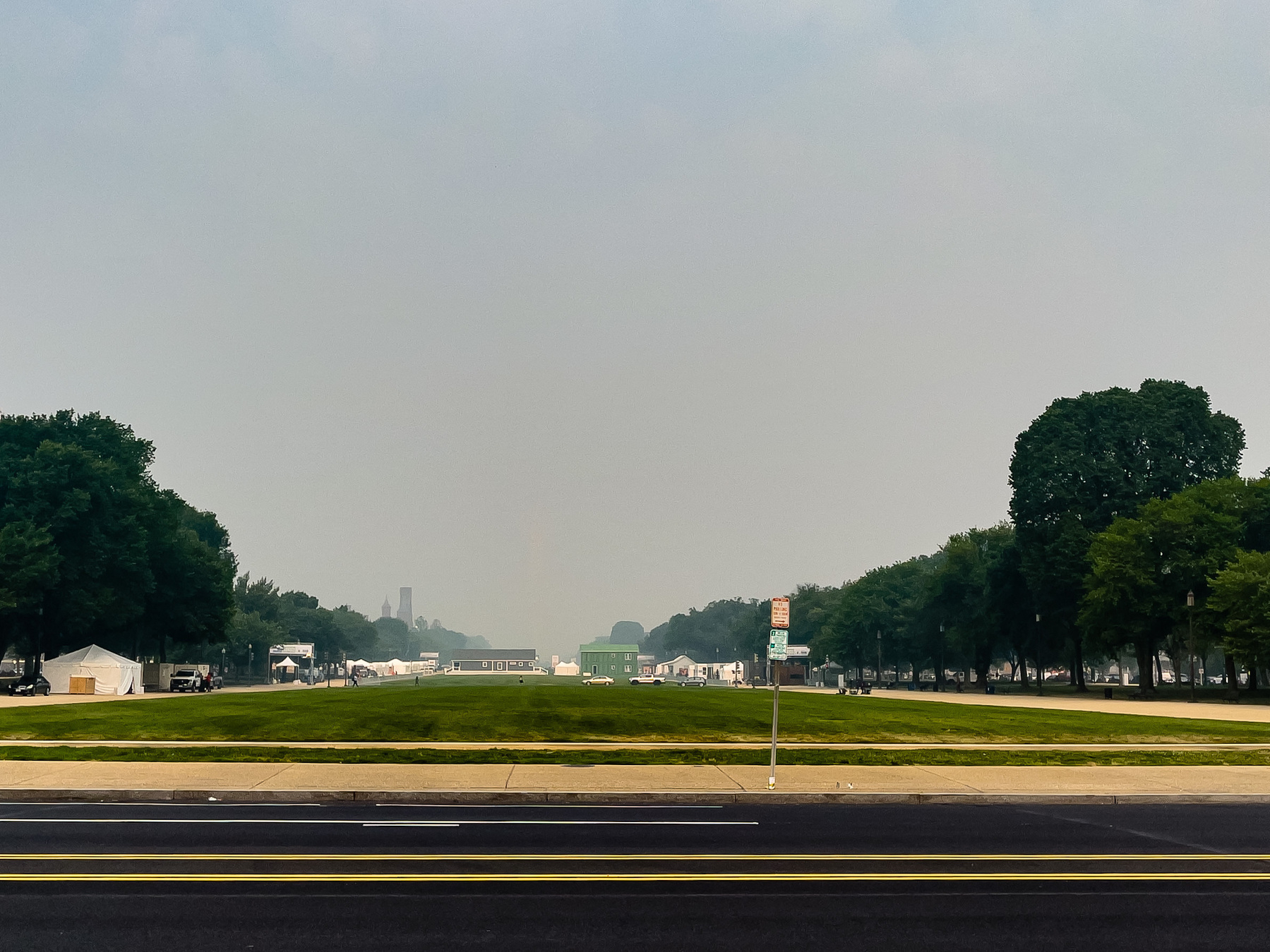
He and his peers are not the first toddlers to have air pollution explained to them (or just have had to deal with it), in fact we have more than enough code orange days around here that systematically impact others more than us, but the intensity, range, and reason is still a shame.
If we were doing everything we could, it might get a little better later in his lifetime. Sure, it might be notably better tomorrow or Saturday but it’ll happen again and again….
It’s a trope, but only because it is an essential act of life.
Listening to behind-the-scenes tales of the incoming demise of the debt ceiling negotiations. Democrats playing to lose, as always. Doesn’t matter how bad it gets.
(Edited for clarity: what was intended was the demise of things in the course of debt ceiling negotiations. All lose, no win on the part of the Dems. The negotiations themselves continued and its participants wouldn’t recognize a demise.)
“Propellers are louder over ground.” This study seems to state the obvious, but I am sure I didn’t read the article closely enough to understand what was novel. That said, it also seems to be speaking to its relevance in a near future urban environment with more VTOL air taxis and ubiquitous drones. But I am going to imagine it bears directly on present-day Washington, D.C. which seems to be increasingly (over the past twenty years of living here in three of the four quadrants) plagued by helicopters, seemingly flying lower too. So much so that our non-voting Congresswoman has made repeat protest actions that in yet another way, mark the failure of the Congress to be a steward of the city. (There’s no change that bill will be acted on.)
Mike Gravel would’ve been 93 today. Before the ‘08 election he took me to lunch on the recommendation from Ralph Nader’s camp, hoping I’d join his campaign. I was flattered but passed. I don’t regret it, but even with how I saw things go, I think it was a bigger opportunity than I understood.
Total Cost of AI?
I was listening to the latest episode of The Important Thing, where they meander around the implications of generative AI. One form of the question they articulated was what happens when stuff is cheaply generated for, as I heard it, by such AIs and for everyone.
The question that came to mind for me was: is it even cheap?
I don’t know.
I haven’t done my homework, so I am speaking for myself in articulating this question — I have a vague sense of recently seeing some reporting on energy usage by these breakthrough AIs (one reason they’re in the cloud is it isn’t practical to run this client-side, they need the cloud)… but I don’t know the particulars, or how it compares to say, crypto mining. But I think we’d even have to compare it to the total cost of feeding a human. The mining of ore and building of machines and generation of energy and environmental impact to run an AI vs. say … cost of same of humans. And that’s just in a sort of typical Capitalist framework.
This is just an inkling. I don’t really know all the bits I am alluding to here. My gut feeling is that when we internalize costs, the machines aren’t advantageous as is widely projected—whether or not that happens to be validated in this case.
Kevin Kelly repeatedly references (reported in Wired twenty years ago, recounted recently by Kelly in this conversation) what he learned about Amish communities' adoption of technology — slow, intentional, broader than most assume - and I kind of wish our society was more like this. Like the Luddites professed to be, with some core values.