
I might become a decent writer if I put as much effort into composing and finishing prose in private as I did in venting it off as stream of consciousness to a couple of poor victims I portray as friends. Instead, it gets vented there (and sometimes cribbed for here) and I don’t feel the urge to revisit and work it further.
Journal
What happens when we all put our heads in the cloud
Yesterday’s AWS outage reinforces an old truth: the cloud is—oversimplified but not wrong—someone else’s computer.
This isn’t an argument against cloud adoption. It’s about trust distribution and control boundaries. How much faith do you place in a single provider, how much can you afford to take advantage of their redundancies—or can you afford not to? What’s beyond your control regardless of SLAs? What do those SLAs actually mean? Are you hedging those bets?
The pattern looks familiar: numerous organizations, despite apparent diversity in their offerings, seem to have concentrated their infrastructure in AWS US-East-1. No real surprise. What’s telling is (based on reporting to date) the apparent lack of tested multi-region failover capabilities. When this reportedly DNS-originated incident hit, rapid adaptation failed—if it even existed.
I don’t operate at hyperscale. I am a web developer who evolved through digital professional services into a technology manager. My experience comes from managing other technologists, engineers, and vendors for what was, in terms of staffing a larger medium-sized business where our budget probably couldn’t match what these tech giants spend on toilet paper. Yet we maintained business continuity—for a 24/7 crisis line—through outages. When any cloud component failed, whether SaaS platforms or our AWS deployments, we retained operational capability through alternative pathways, including fallback to “pre-cloud” configurations.
Our teams' recovery strategy addressed both RTO and RPO intuitively, before we knew what those terms were. We identified single points of failure, built redundancy where cost-effective, and accepted calculated risks elsewhere. Most importantly, we tested these failover procedures regularly.
This sounds like common sense. Experience suggests otherwise.
If your organization needs someone who treats information systems and infrastructure as a product serving your team, someone who speaks plainly and pragmatically about availability, threat models, and builds contingency plans that actually meet reality, especially if you’re trying to make the world a better place, I am interested.
I am a technologist but a morning like this encourages my Luddism (understanding technology’s impact, valuing autonomy, adopting it intentionally). I had cash; while Venmo was down, our visit to the PTSO coffee table outside school happened anyway & The Childe did some practical math.
A couple of photos from the No Kings rally in DC
I appreciate the ecumenical critiques. Not to “both-sides” it: there are significant differences and fairly one-sided undemocratic reasons for the complete deadlock, but the clippy sign could very well stand the test of time. I had my ear out for process and not just content critiques from the stage.

I have to wonder, with Donald Trump’s particular enthusiasm for McDonald’s, and his self-aggrandized narrative about his role in real estate, does Trump play their Monopoly game?
I took Metro this morning. Got on a Silver Line train in the direction of Ashburn. Operator pronounced it ASSburn.
Yeah, we’re all on the train to ass burn these days.
Bruce Schneier on Digital Threat Modeling Under Authoritarianism
It might be uncomfortable to think about. I remember in the past, it was a bit of a no-go to even bring up whether we saw our government as a potential threat in our threat model at a past job. And getting an answer? Well, that was even less fun, given the sensitivity of certain data and the tension of priorities. (I didn’t get one!)
Journalism should have already be on board and well ahead on the idea, especially for certain stories and topics. But the Pentagon’s push this week should really make that clear. Nevermind the major networks recently being directly targeted and their general capitulation. Or maybe the State Department’s proclivity to kick out journalists who ask pesky questions?
I do not think this is a question anymore.
The seasons change, but I am always anti-fascist.
Just some curious bullshit
What appeared to be RFK Jr’s old 2024 presidential campaign bus was parked (illegally) outside the Pierce School condominiums in northeast DC on September 16. This location is also known for hosting a crypto party aligned with Trump’s inauguration and being a place Musk and other DOGE figures early in the administration.
I have no other context, but found it weird to see. I found it vaguely notable that it happened between RFK Jr’s grilling before the Senate Finance Committee last week and his fired CDC director’s testimony before the Senate HELP Committee yesterday. That’s probably a coincidence.
If RFK Jr. hadn’t bought a multimillion dollar home in Georgetown upon his appointment, I’d say it would fit that he’d be living in the old campaign bus (down by the river?) when in DC.
Whatever the actual story, DC has enough Dear Leader banners of Trump being hung off of Heritage Foundation, Agriculture and Labor buildings, we don’t need an outdated totem of failure emblazoned with our other narcissist-in-residence rolling around town.

What did he fight for?
I’ve been thinking about the news lately. (That’s a true statement most days of the week, most weeks of the year.)
I’ve been thinking about Jerry of Ben & Jerry’s quitting, because of speech restrictions from Unilever, Ben & Jerry’s parent company.
I’ve been thinking about all the backlash on people who mostly either tried to counter the hagiography of Charlie Kirk or perhaps were venting less tactfully (I’ve been known to).
I’ve been thinking about one of my grandfathers — I’ve mentioned him before in the open air of the Internet: The one who is a veteran of the Battle of the Bulge, who really fought real Nazis. A conservative, a believer in freedom. I think also, like many veterans of that and other wars, he came out of World War II an atheist. (He went in a Quaker, one of the more conservative “programmed” variety, like Nixon.)
He was also a dairy farmer, part of a dairy co-op that supplied Ben & Jerry’s (well before the Unilever acquisition). I do not know what he thought about the hippies making and selling ice cream all over New England and Upstate New York, but I know he didn’t mind eating it or selling to them. (Conversely, Ben and Jerry had to know all these family dairies their milk came from weren’t exactly communes.)
I know he didn’t mind their speech. I know this because when I grew into a teenager, I took positions against what I considered abuses of authority in my small world—positions he wouldn’t take himself. And I got in trouble for them.
And he spoke up in my defense.
“What did I fight for?” my mother has quoted him from that time.
What did he fight for, I wonder. Most days of the week. Most weeks of the year.
The climate crisis, slow-roll-WWIII, no better than band-aids on the social safety net between axe swings at it, and a duopoly political system oscillating between making it all happen or doing nothing people actually need to stop it, and an economy teetering on realizing it.
Imagine, in terms of the kinds of things being cut in proposed House and Senate GOP budget bills, what we could pay for already (accepting ludicrous premises) if we just weren’t flying all those KC-135s and C-17s constantly at $20k+/hour/plane re: Israel/Iran. Or you know, the fucking parade.
If you told me 30 years ago that an adult me, not a lawyer, would listen to Supreme Court oral arguments “for fun,” I’d have spit my Mountain Dew in your face.
Did a filibuster happen if no one being opposed had to bat an eyelid?
Some thoughts on Senator Cory Booker’s filibuster effort overnight and into this morning
I've been quiet here (not so much directly on Bluesky). I hope I can say it is because I have been busy in worthwhile efforts.
We’re getting snowed but I don’t mean the weather.
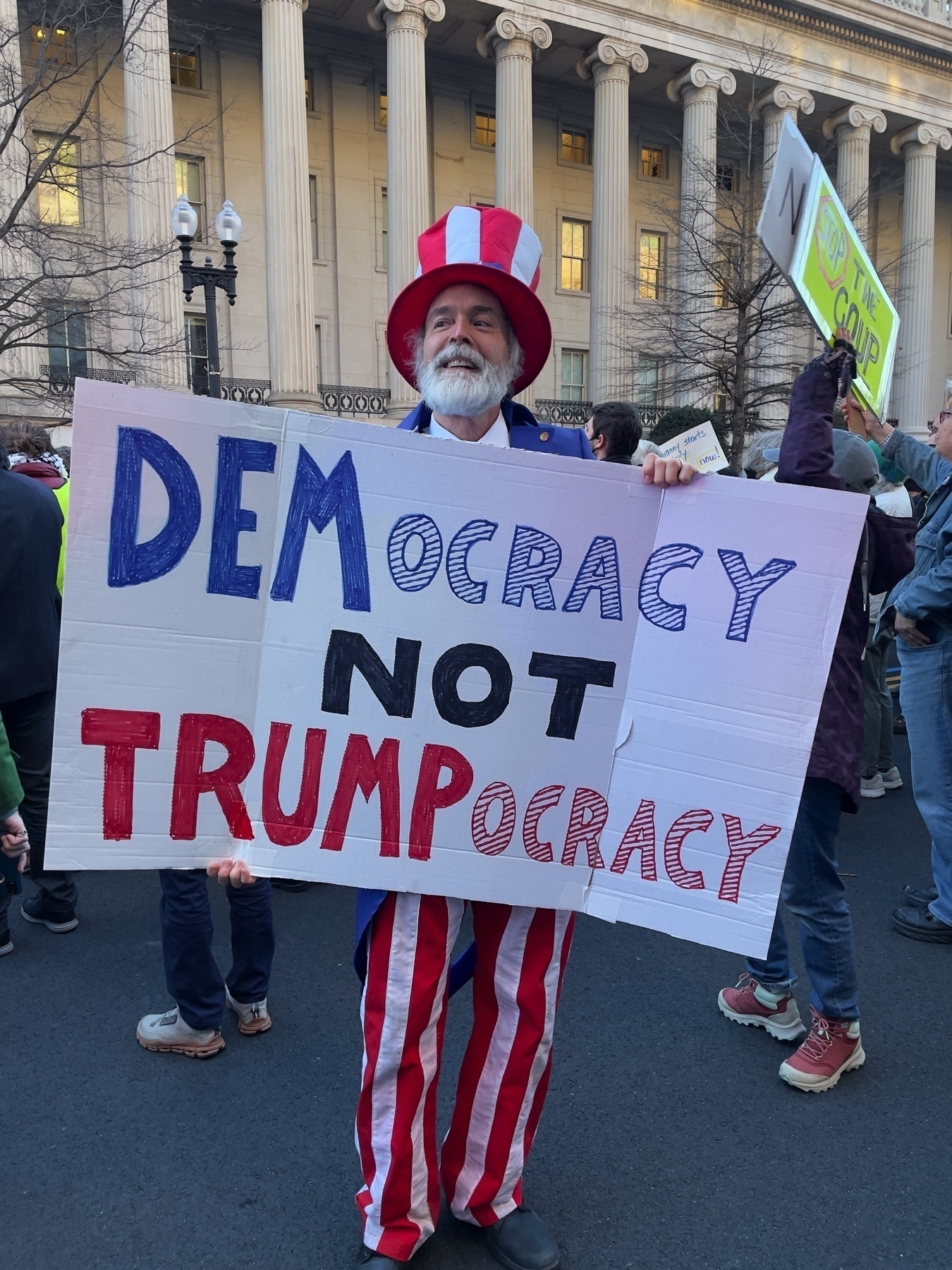
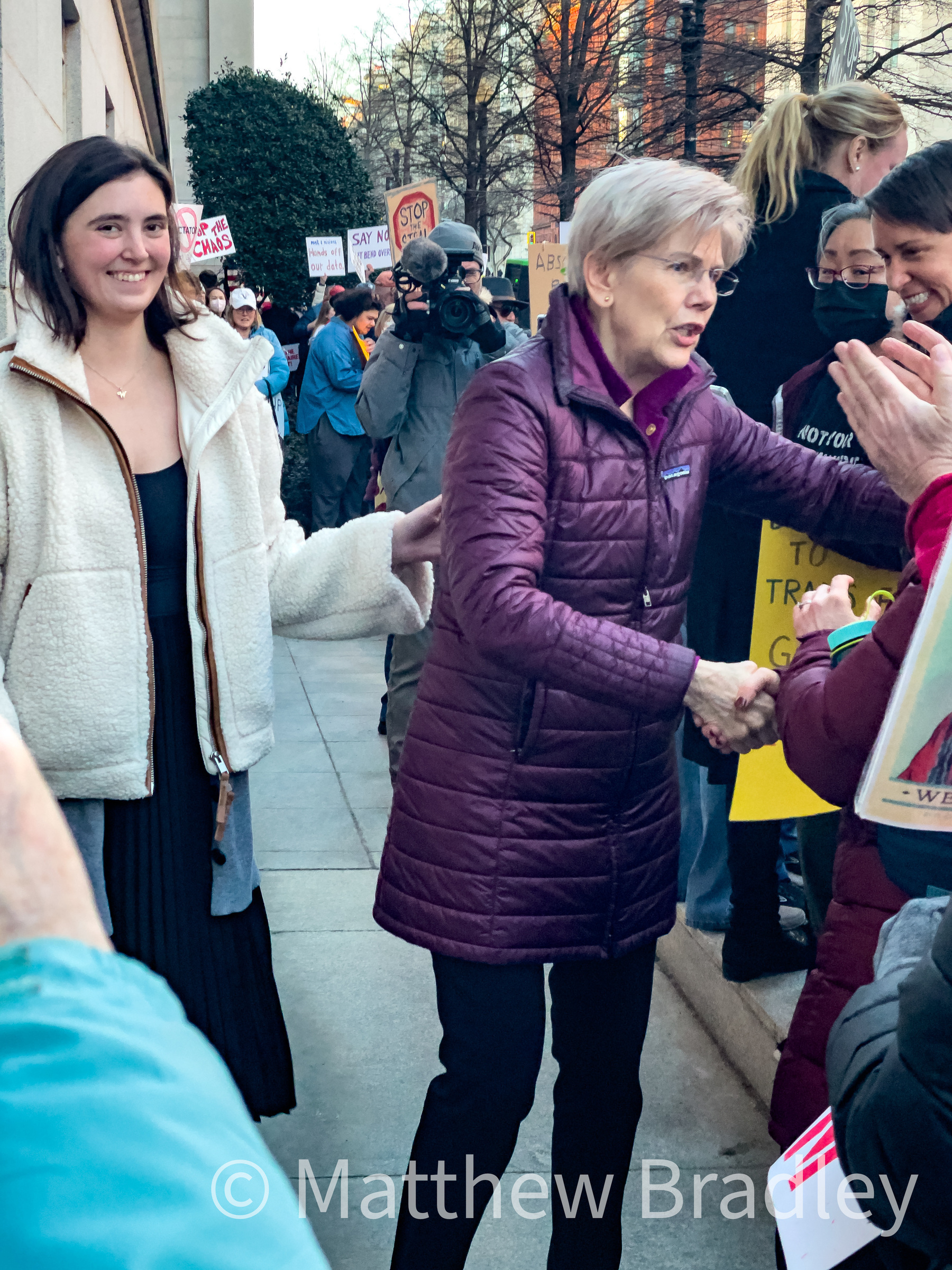
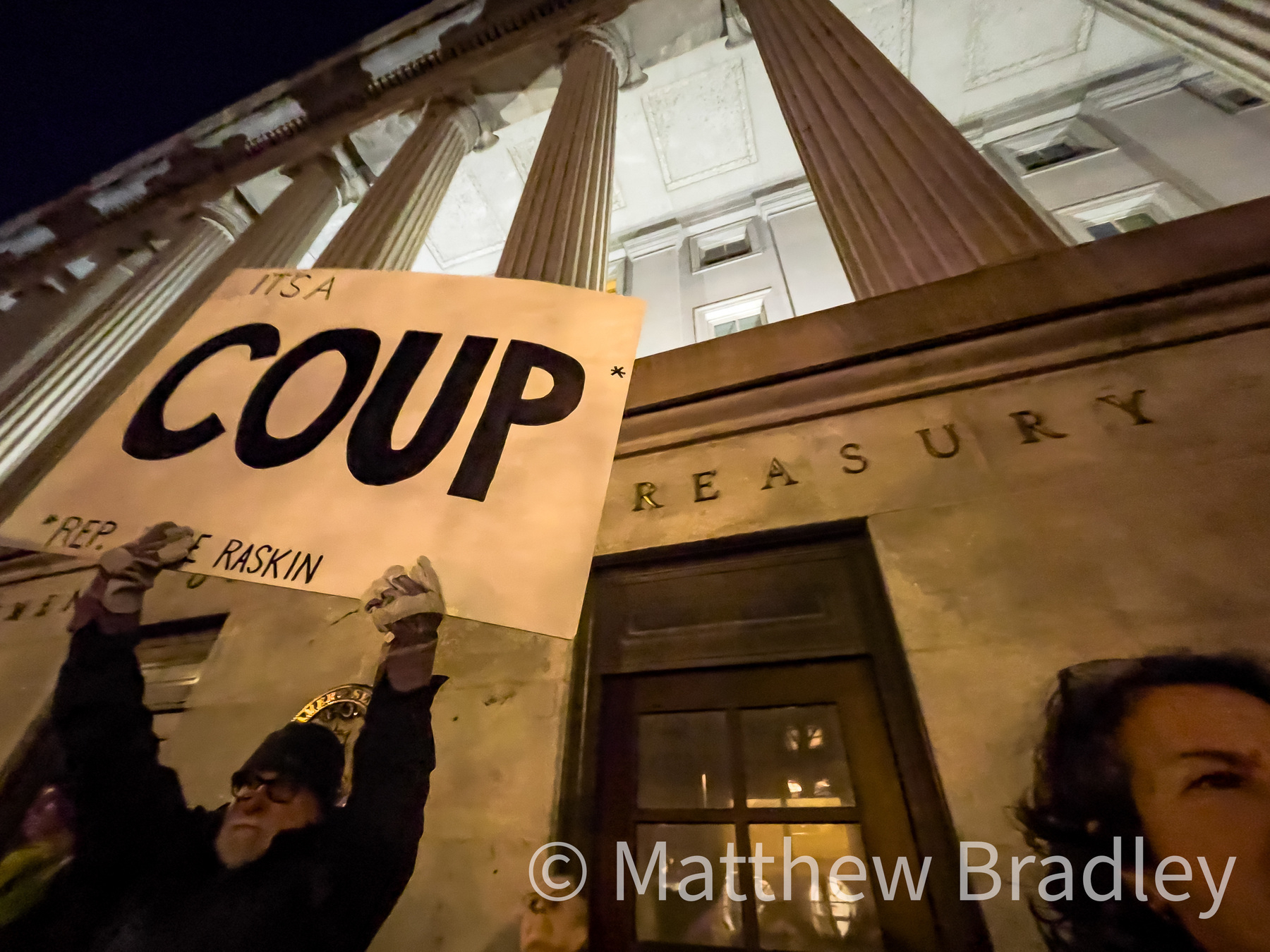
Tuesday’s rally outside the Treasury Department building, along 15th Street NW between F and G.



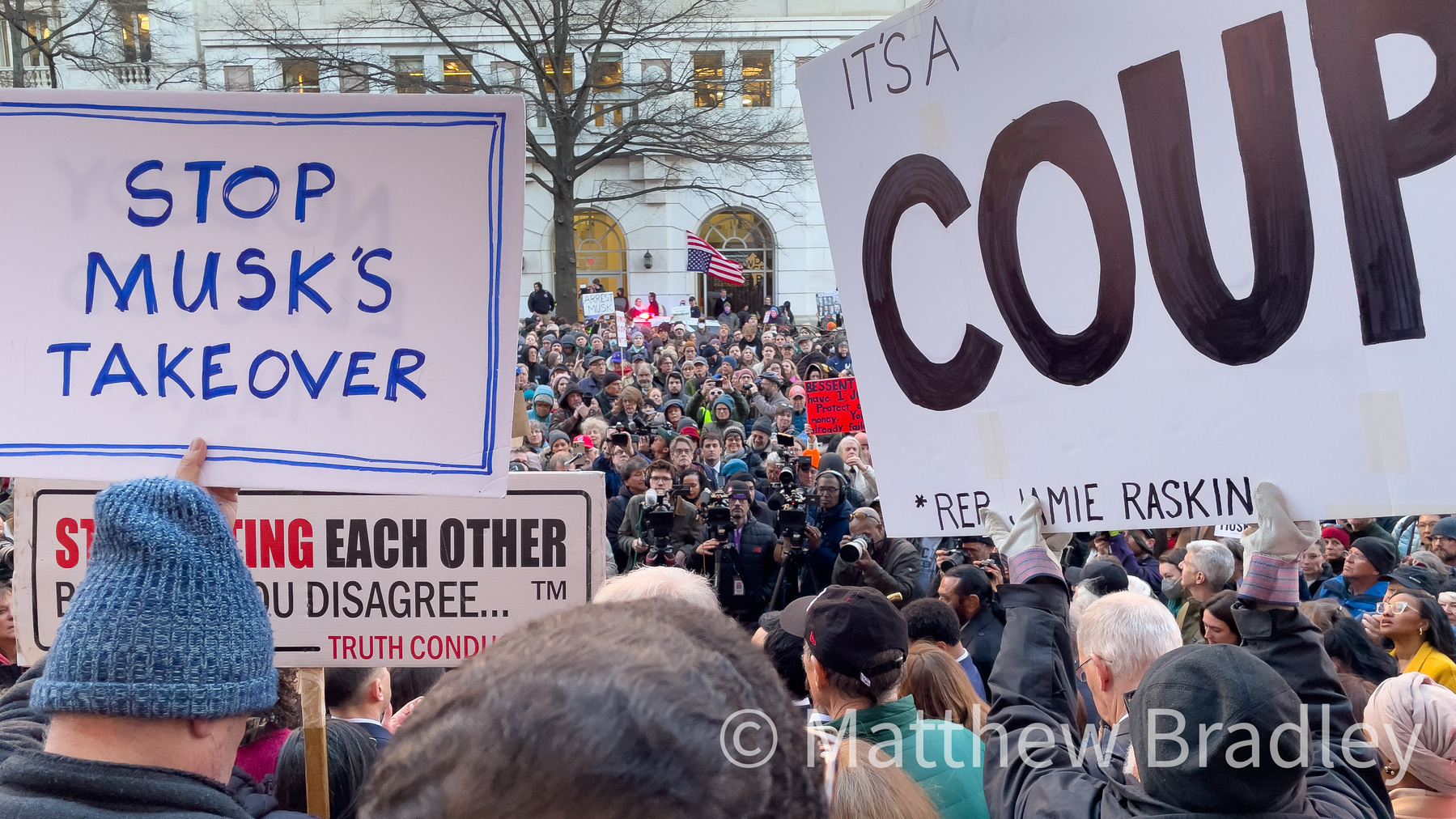
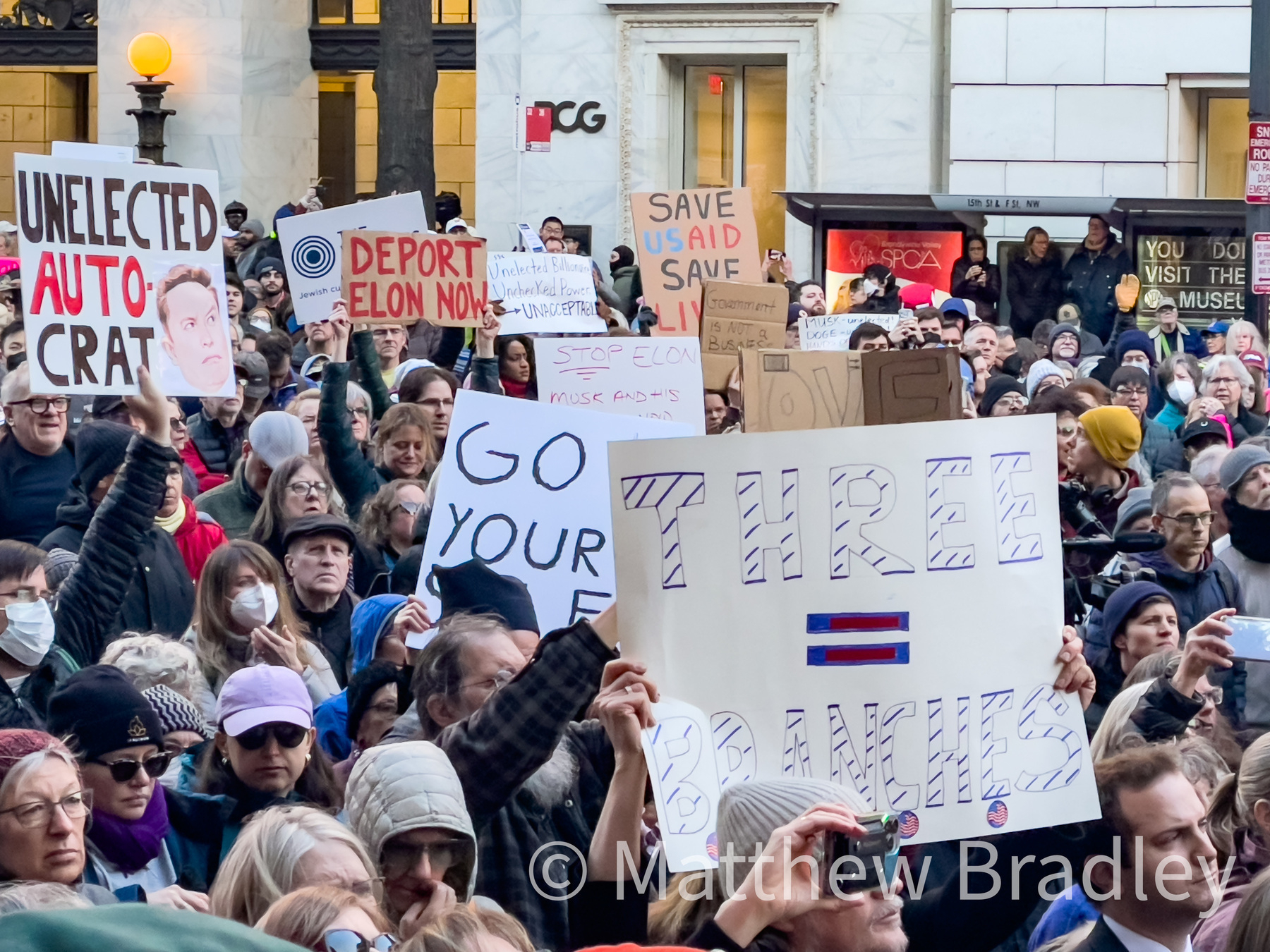
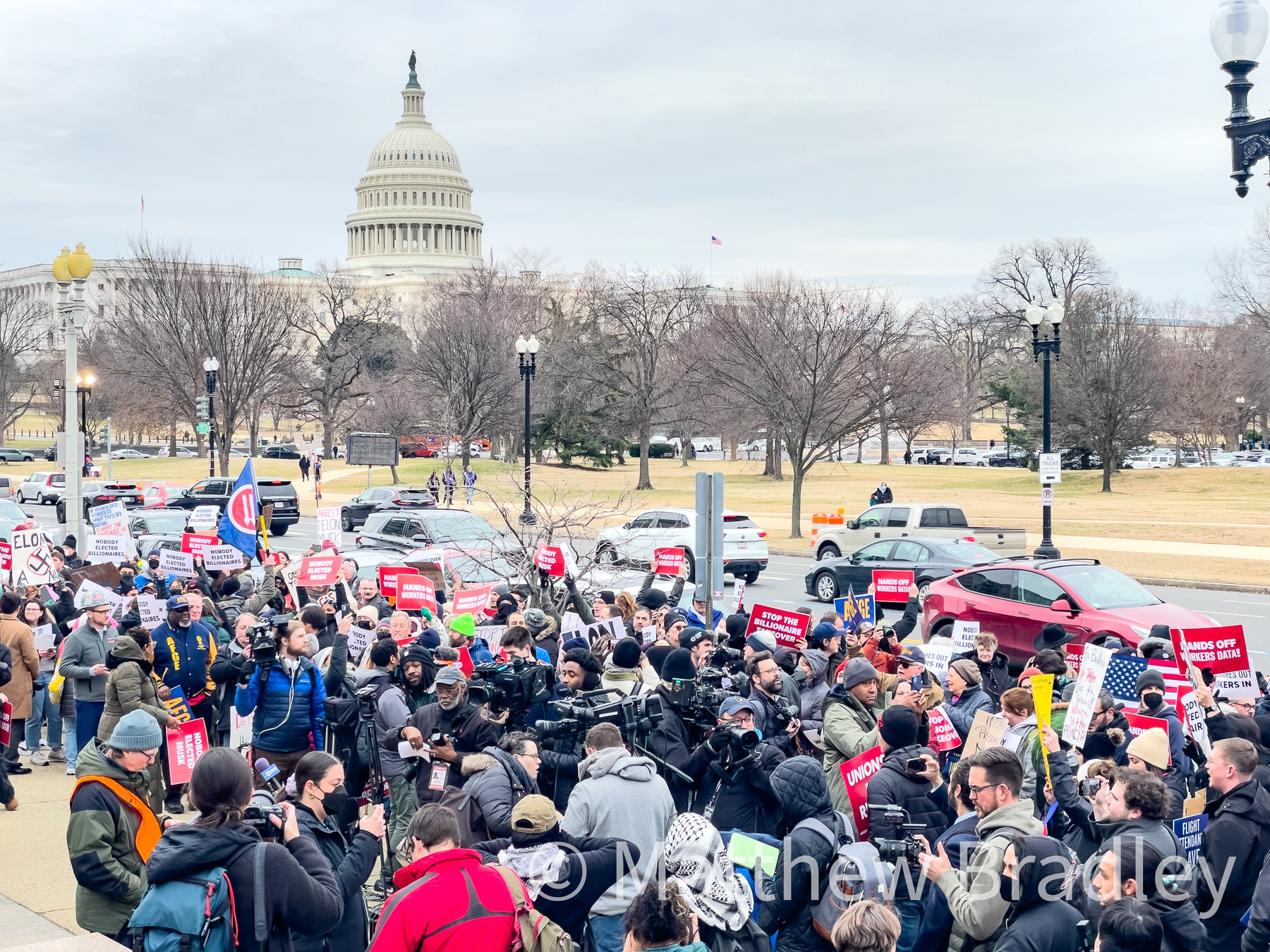
Yesterday outside the Department of Labor

The blowback is going to come in all forms
A neighbor, whose org is largely funded by USAID, shared that they laid-off 70% of their staff and they who remain are there to close-up shop. The web site is reduced to a splash page. They helped farmers farm better and more sustainably, adopting new technology and adapting to new environments, enabled locally-controlled economic development and community banking, implemented clean water and sanitation programs, and facilitated medical services capacity building.
They worked in different places around the world, but I was aware of their work supporting efforts in Latin America — places this administration vilifies and slanders and does not to want people to migrate from to here.
I’m not without a lefty critique of empire, soft power, and a suspicious jaundiced eye of the origins of USAID and what else perhaps hid or hides in the folds of its efforts. But if I were, so implausibly given Musk’s opportunity (his seemed fairly implausible until now), I would be listening and my first move would not be to blow real things real people need out of the water.
And the blowback? I already alluded this is obviously counterintuitive to the wish to mitigate migration (however you come to hoping for that). Our agricultural assistance through US aid involves buying American commodities and distributing them elsewhere acts as a price stabilizer here (there are critiques on this too, but just dropping this and not doing a better thing or fixing subsidies here, of which I hear nothing from, well… anybody). Our capacity for tracking, preventing, building resistance to disease is being wounded by freezes at NIH, CDC, pulling out of WHO, and shutting down USAID. That will hurt, and presumably kill, many. And maybe us.
And, cam anyone expect the ripple effects of pulling out these and other rugs so suddenly to not result in radicalizing some people in a way that no nation state can prevent and which has compounded the violence in the world, and our own security?
USAID shutdown reportedly styming anti-human trafficking direct service efforts
I worked for nearly a decade with the organization that currently runs the National Human Trafficking Hotline. I do not know the current specific details, but I believe it and am saddened by this news. I and my team supported some efforts to engage with some of the international partners alluded to if not mentioned in this reporting. I have all kinds of feelings about the space (and Polaris's unfortunate support for some very flawed legislation in the US), and I do not have an uncritical view of USAID, but it pains me to understand the many ways people just trying to help people are being crippled, seized-up and disrupted... and now, in this case, to maybe even _know_ some of the people. (Never mind the disruptions to refugee and immigration support separate from the USAID developments, where there are some more close-to-my-old-'home' hits.)
From Wired:
The funding cuts and pauses have immediately made it harder for people to safely escape scam compounds, according to half a dozen sources working to combat scams and trafficking. The cuts have also shrunk services that house and care for human trafficking victims and are limiting investigatory work into criminal groups. After just days of funding disruptions, sources say that the cuts have caused “chaos” for staff working to help survivors on a daily basis. Some organizations have already gone dark, and relief workers add that the withdrawal of services could embolden the criminal groups behind the fraud.
I’ve kind of been at a loss, frozen and watching the horror show. Keeping a link log of the wretched developments but not publishing it. So far there are just my trite-and-sometimes cathartic reactions on social spaces. Not sure I have anything useful to add. Girding myself.
We finally got here—I’ve got a double Manhattan, a lit tree, most things cleaned and cooked before the holiday, only some wrapping (and lots of Santa-ascribed assembly) to sneak in tomorrow … so, eff it, now I will kick back and watch A Very Murray Christmas.
Tonight I’m remembering Phillip Wearne again. A friend in a chaotic time, and perhaps still also a missed opportunity to learn more from him. He introduced me to Graham Greene’s works, for which I’ll always be grateful.
It’s been a while since I posted an indulgent, vapid photo like this. Cheers, you filthy animals.

Long day, mostly night.